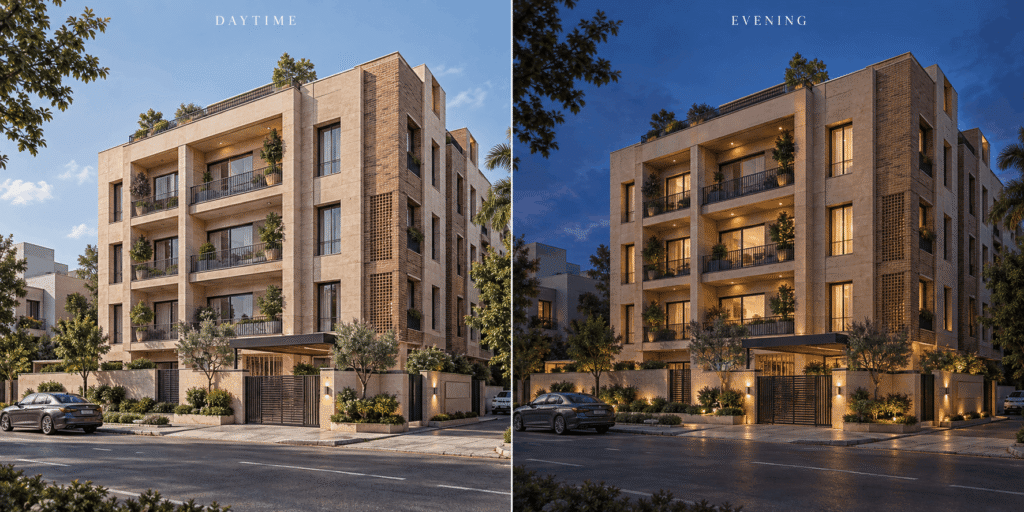
The same building can tell two different stories depending on when you show it. In daylight, buyers notice facade materials, balconies, landscaping, and the surrounding street. As evening falls, illuminated entrances and warm windows draw attention to how the development might feel after dark.
Neither view is automatically better. The right choice depends on what your audience needs to understand and where the image will appear.
For developers and architects in Pakistan, choosing the lighting early helps keep visualization work focused. It also prevents spending the entire image budget on atmospheric views that leave practical questions unanswered.
What Daytime Renders Show Best
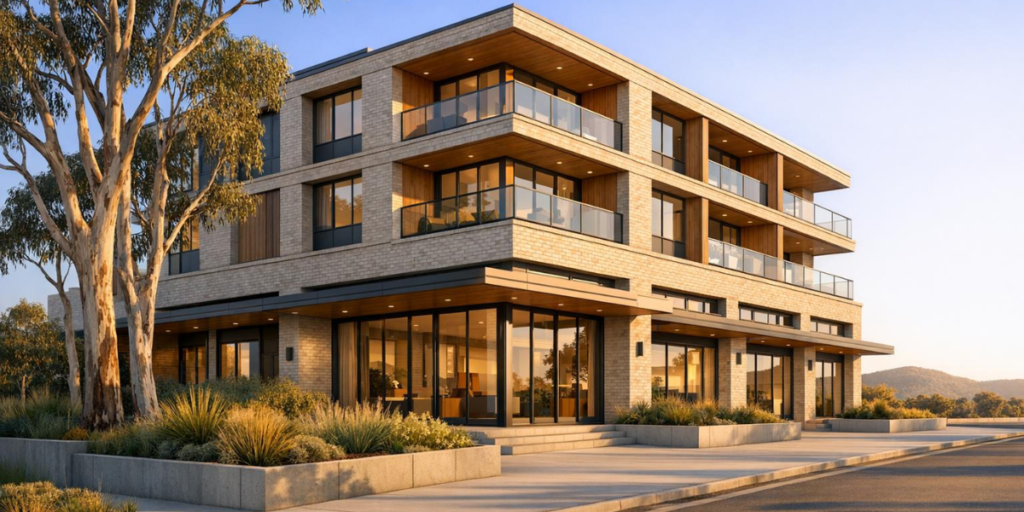
Daytime renders are useful when architectural clarity comes first. They help viewers assess building proportions, material combinations, entrances, and the relationship between the property and its surroundings.
For example, a residential project in Lahore might need to explain its boundary treatment, driveway access, and shaded balconies. A daylight street view can bring these features together in one readable image.
When commissioning 3D Exterior Rendering Services in Pakistan, identify the details buyers or reviewers must see. This gives the visualization team a reason to select a particular sun angle and camera position.
Daylight does not have to mean harsh midday sun. Softer conditions can reveal finishes, while directional light can make recesses and projecting elements easier to read. Chaos’s exterior lighting guide explains how these lighting choices influence the visibility of architectural form.
What Evening Renders Add
Evening renders shift attention towards artificial lighting and atmosphere. They can show how an entrance welcomes visitors, how pathways connect outdoor spaces, or how a restaurant terrace relates to the building.
These views are especially useful when lighting forms part of the design. A hotel entrance, retail frontage, or residential courtyard may communicate something important after sunset that daylight cannot fully reveal.
Early evening often offers a useful balance. There is enough ambient light to retain the building’s outline and surroundings, while interior and landscape lighting become visible.
However, the scene should follow the proposed lighting scheme. Adding dramatic facade illumination that the developer has never specified creates expectations the finished property may not meet.
Match the View to the Decision
Before choosing between day and evening, ask what the image needs to help someone decide.
For material selection or facade review, daylight is usually the more useful starting point. For presenting an illuminated arrival sequence or outdoor dining area, an evening view may explain more.
The same principle applies to marketing. A brochure cover might benefit from an atmospheric evening image, while the pages inside need clearer views of entrances, access, and landscaping.
A brief for 3D Exterior Rendering Services should state the purpose of every requested image. “Show the main entrance and pedestrian approach” gives the artist more direction than “make it look premium.”
When Using Both Makes Sense
Some projects benefit from showing the same viewpoint under two lighting conditions. This lets viewers understand the architecture during the day and its lighting character after dark.
Consider an apartment development in Karachi. A daytime image could explain podium landscaping and street access. An evening version could show the entrance canopy and shared outdoor spaces in use.
Keep the geometry, planting, materials, and camera position consistent when creating a direct comparison. Otherwise, viewers may struggle to tell whether they are seeing a lighting change or a different design.
If the budget is limited, commission the view that answers the most important questions first. A second lighting version is worthwhile when it adds information.
Avoid These Common Lighting Mistakes
A bright sky does not guarantee a useful daytime render. Excessive exposure can wash out pale stone, while deep shadows may conceal the entrance. Review whether the building remains readable across the image.
Evening scenes have their own risks. Glowing windows in every room, overly bright landscape lights, and heavy colour effects can make a development feel artificial.
Check the following before approval:
- Sun direction matches the site orientation.
- Materials remain recognisable under the selected lighting.
- Exterior fixtures reflect the proposed design.
- Entrances and pedestrian routes are clearly visible.
- Background buildings and landscaping remain consistent.
A marketing render can illustrate lighting intent, but it should not be treated as a measured lighting-performance study.
Choose the View That Serves Your Project
The strongest exterior image is the one that makes your project easier to understand. Daytime views explain form and context; evening views reveal lighting and atmosphere. A carefully planned combination can do both.
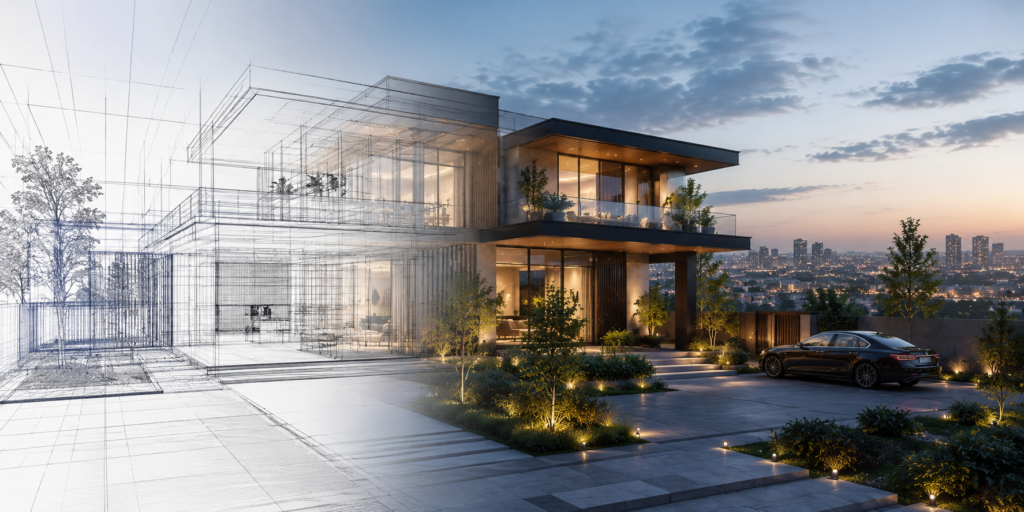
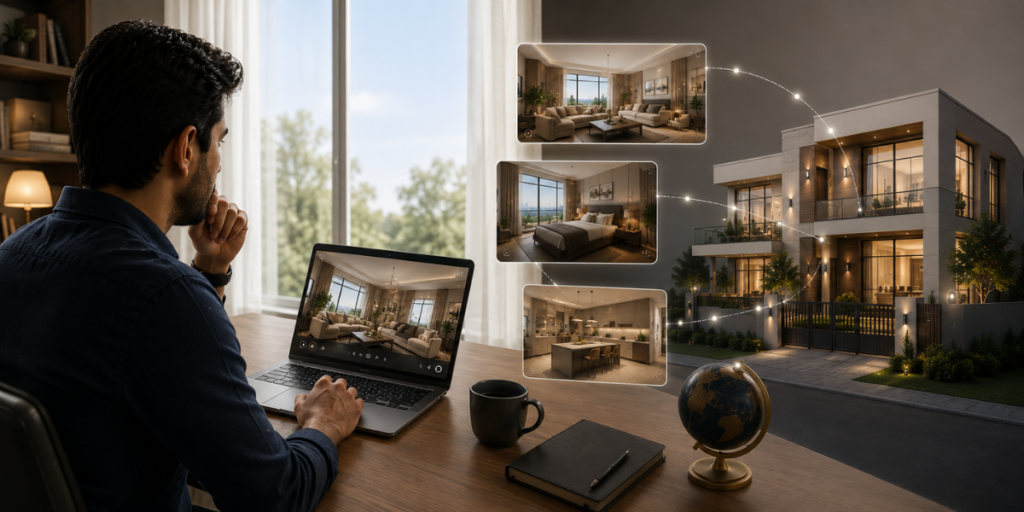
Pixarch’s Architectural visualization services in Pakistan help developers and architects present unbuilt projects through considered imagery. Share your drawings, target audience, and intended uses to establish which views deserve a place in your presentation.